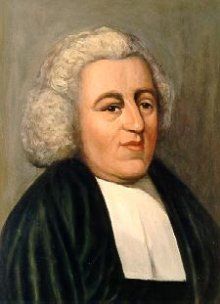
On March 21, 1748, a violent storm in the North Atlantic became the defining turning point in the life of John Newton-a moment he would later commemorate every year as the day God "delivered [him] out of deep waters." That night did not merely save a ship from sinking; it marked the beginning of one of the most remarkable spiritual transformations in Christian history.
Born in London in 1725, Newton was shaped early by the devout faith of his mother, who taught him Scripture and catechism before her death when he was seven. Though her influence lingered, Newton's adolescence and early adulthood spiraled into moral collapse. Pressed into naval service and later drawn into the Atlantic slave trade, he became-by his own admission-deeply profane and spiritually hardened. In his autobiographical An Authentic Narrative (1764), Newton describes himself during this period as one who "sinned with a high hand," pursuing rebellion without restraint.
His descent reached a humiliating low point when, after defying authority, he was abandoned on the West African coast and reduced to near-servitude under a slave trader's household-what he later described as becoming "a slave of slaves." Rescued through the intervention of his father, Newton boarded the merchant vessel Greyhound for passage back to England. It was aboard this ship that the crisis of March 21 unfolded.
During the storm, the vessel was nearly destroyed as waves tore away its structure. Newton narrowly escaped death when another sailor, sent ahead of him, was swept overboard. Forced into relentless labor-pumping water, sealing leaks, and steering through the night while lashed to the helm-Newton began to reckon with the reality of his life and the certainty of divine judgment. In that moment of extremity, he uttered what he later called his first genuine prayer in years.
Reflecting on the event, Newton wrote that he began to recall "the mercy of the Lord" and the meaning of Christ's atoning death-"a death for sins not his own, but for the sake of those who should put their trust in him." Though his understanding was still incomplete, this moment marked the decisive break in his spiritual trajectory. He would later refer to it not as a sudden conversion, but as the beginning of a gradual awakening to grace.
Even so, Newton's transformation unfolded slowly and imperfectly. For several years after the storm, he continued to work within the slave trade, eventually becoming a captain of slave ships. Yet his writings and later reflections reveal a growing moral unease. He introduced religious practices aboard his vessels, discouraged profanity among his crew, and increasingly wrestled with the contradiction between his faith and his profession.
A decisive shift came after Newton left seafaring in 1755 due to illness. Immersed in theological study, he was ordained in the Church of England in 1764 and became a prominent evangelical pastor in Olney. There, he began writing hymns to accompany his preaching, collaborating with poet William Cowper. Among these compositions was Amazing Grace (1772), a hymn that distilled his personal experience of sin, mercy, and redemption:
"Amazing grace, how sweet the sound
That saved a wretch like me;
I once was lost, but now am found,
Was blind, but now I see."
Newton's later life was marked by deep repentance over his involvement in slavery. In 1788, he published Thoughts Upon the African Slave Trade, a powerful and widely circulated pamphlet in which he confessed his guilt and denounced the trade in unequivocal terms. "It will always be a subject of humiliating reflection to me," he wrote, "that I was once an active instrument in a business at which my heart now shudders."
His influence extended beyond the pulpit. As a mentor to William Wilberforce, Newton played a quiet but significant role in encouraging the parliamentary movement that would ultimately lead to the abolition of the British slave trade in 1807. His testimony-both personal and public-provided moral weight to the growing abolitionist cause.
Scholars today often emphasize that Newton's story is not one of instant moral perfection, but of progressive conversion-a life gradually reshaped by grace. Historians such as Bruce Hindmarsh have noted that Newton's narrative reflects the evangelical pattern of awakening, struggle, and transformation, while biographer Jonathan Aitken highlights the enduring tension Newton carried between his past actions and his later convictions.
March 21 thus stands as more than a biographical milestone. It represents a theological and historical moment in which divine mercy interrupts human rebellion, setting in motion a trajectory that would move from the decks of slave ships to the heart of the abolitionist movement-and into the global hymnody of the Church.
Nearly three centuries later, the voice of John Newton continues to echo wherever "Amazing Grace" is sung-a testimony born not in comfort, but in the chaos of a storm, and in the quiet realization that no life lies beyond the reach of redemption.


