As churches around the world gather on the final night of the year, Watch Night services stand as one of Christianity's most enduring and meaningful traditions - a night marked not by fireworks or fanfare, but by prayer, repentance, testimony, and hope.
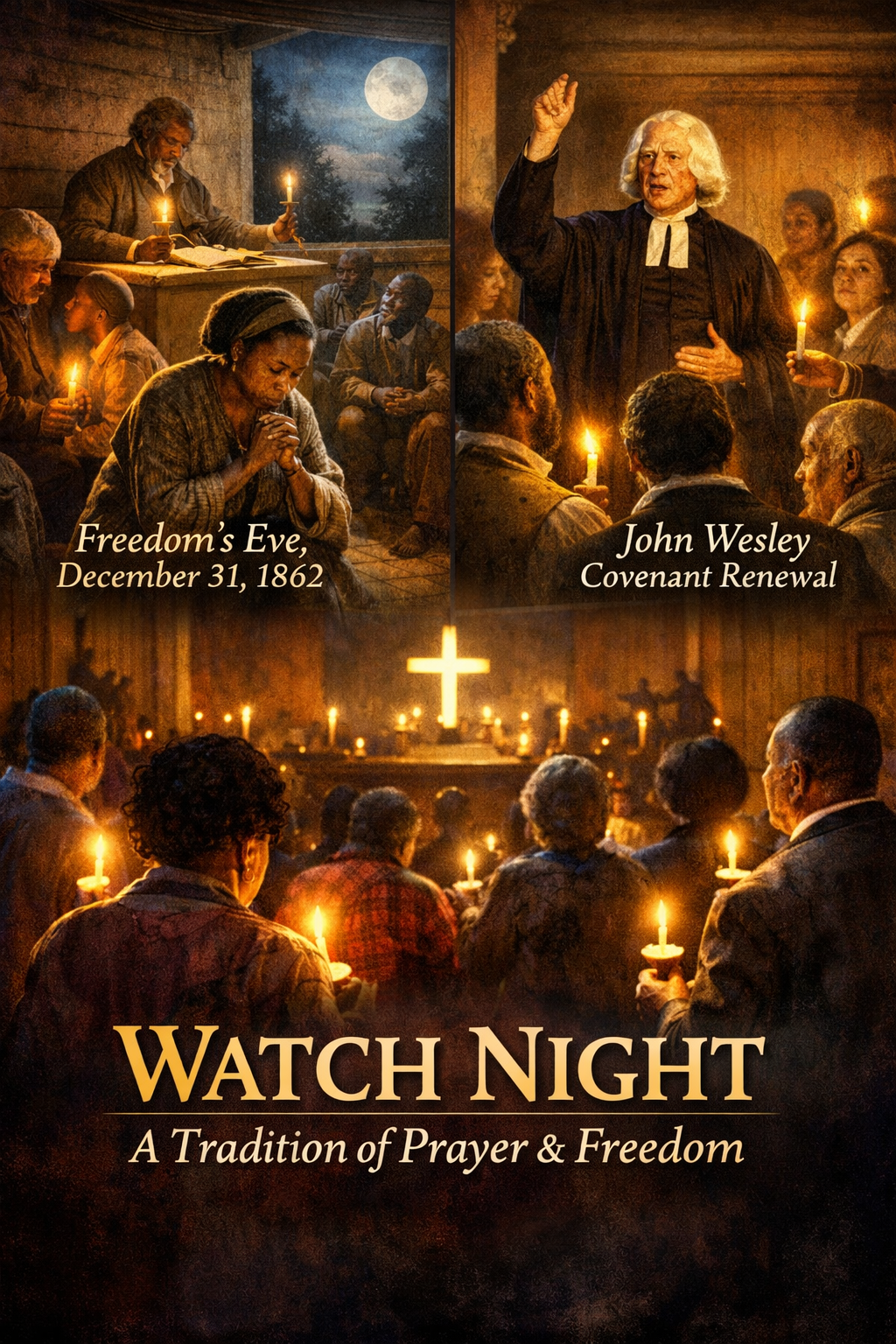
The roots of Watch Night stretch back to the 18th century, when John Wesley, founder of the Methodist movement, introduced covenant renewal services held on New Year's Eve. These gatherings invited believers to examine their hearts, confess sin, and recommit their lives to God as the calendar turned. Rather than welcoming the new year with celebration alone, Wesley urged Christians to enter it watchfully - awake before God.
But Watch Night took on its deepest historical and spiritual meaning in the African American church.
On the night of December 31, 1862, thousands of enslaved African Americans gathered in churches, cabins, and hush harbors across the United States. They prayed, sang, and waited through the night, knowing that at midnight the Emancipation Proclamation would take effect. That night became known as "Freedom's Eve."
As the clock struck twelve and January 1, 1863 began, the long-awaited promise of freedom was proclaimed. Watch Night was forever transformed - becoming not only a moment of spiritual vigilance, but a holy witness to deliverance, justice, and God's faithfulness.
From that night forward, Watch Night services in Black churches carried layered meaning:
-
Thanksgiving for survival
-
Lament for suffering endured
-
Praise for freedom won
-
Hope for promises still unfolding
Across denominations today, Watch Night services typically include:
-
Extended prayer
-
Scripture reading
-
Testimonies
-
Communion or covenant renewal
-
Silent reflection as midnight approaches
Theologically, Watch Night echoes a deep biblical rhythm - "watching and waiting" before God (Matthew 26:41; Habakkuk 2:1). It affirms that time itself belongs to the Lord, and that believers enter each new year not by chance or fortune, but by grace.
In a world that often welcomes the new year with noise, Watch Night offers a countercultural witness:
a church awake, on its knees, remembering the past and entrusting the future to God.
As congregations gather again this December 31, the tradition endures - a sacred pause between years, where faith watches for dawn.