For nearly two years, Ilia Malinin made men's figure skating feel inevitable. But on one electric night in Milan, inevitability gave way to history.
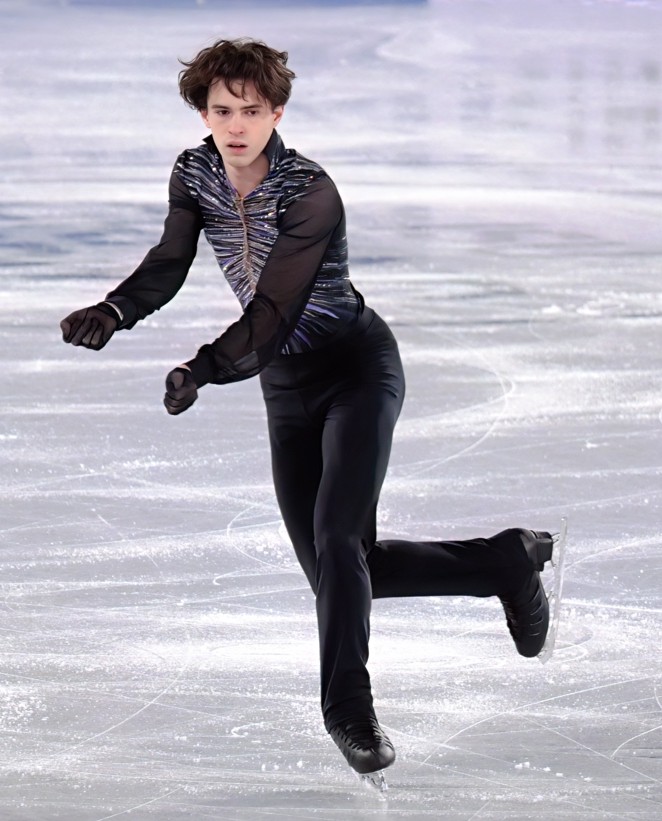
Mikhail Shaidorov, the 21-year-old from Kazakhstan, delivered the performance of his life at the 2026 Winter Olympics, capturing gold in one of the most dramatic upsets in recent Olympic memory. What many expected to be Malinin's coronation instead became a breakthrough moment for a rising star - and a defining chapter for the sport.
International media quickly took notice.
The Guardian wrote that what seemed destined to be a "coronation" instead became a reminder that "at the Olympics, history can turn in seven minutes." BBC Sport declared that while the "Quad God" proved mortal, a new champion emerged - calm, composed, and unshaken. The New York Times described Shaidorov as "the skater no one saw coming," highlighting how he surged from fifth after the short program to Olympic gold with a season-best 291.58 points.
On a chaotic night when five of the final six skaters fell, Shaidorov stayed upright.
He landed five quadruple jumps, including his signature triple Axel-quadruple Salchow combination, building momentum instead of losing it. Even a slight slip on a quad lutz did not derail him. His composure stood in stark contrast to the tension unfolding around him.
Meanwhile, Malinin - the overwhelming favorite and two-time world champion - struggled under the weight of expectation. After leading the short program, he fell twice in the free skate and abandoned his planned quad Axel, ultimately finishing eighth overall.
"I blew it," Malinin said candidly afterward. Yet he also praised Shaidorov, calling him important to the sport and reminding reporters, "We're all a big figure skating family."
For Kazakhstan, the victory carried historic significance. Shaidorov became the nation's first Olympic champion in figure skating and delivered its first Winter Olympic gold medal in 32 years. Several outlets noted the poetic parallel to his coach, 1994 Olympic champion Alexei Urmanov, who similarly capitalized when favorites faltered.
Shaidorov himself appeared stunned.
"I just wanted to enjoy my free skate," he said after the scores were confirmed. Later he added, "Nothing is impossible."
In elite sport, Olympic nights often redefine narratives. What began as a test of dominance became a reminder of unpredictability. The men's field now feels less certain, more open - and perhaps more compelling.
One skate rewrote the script. And men's figure skating may not look the same again.


