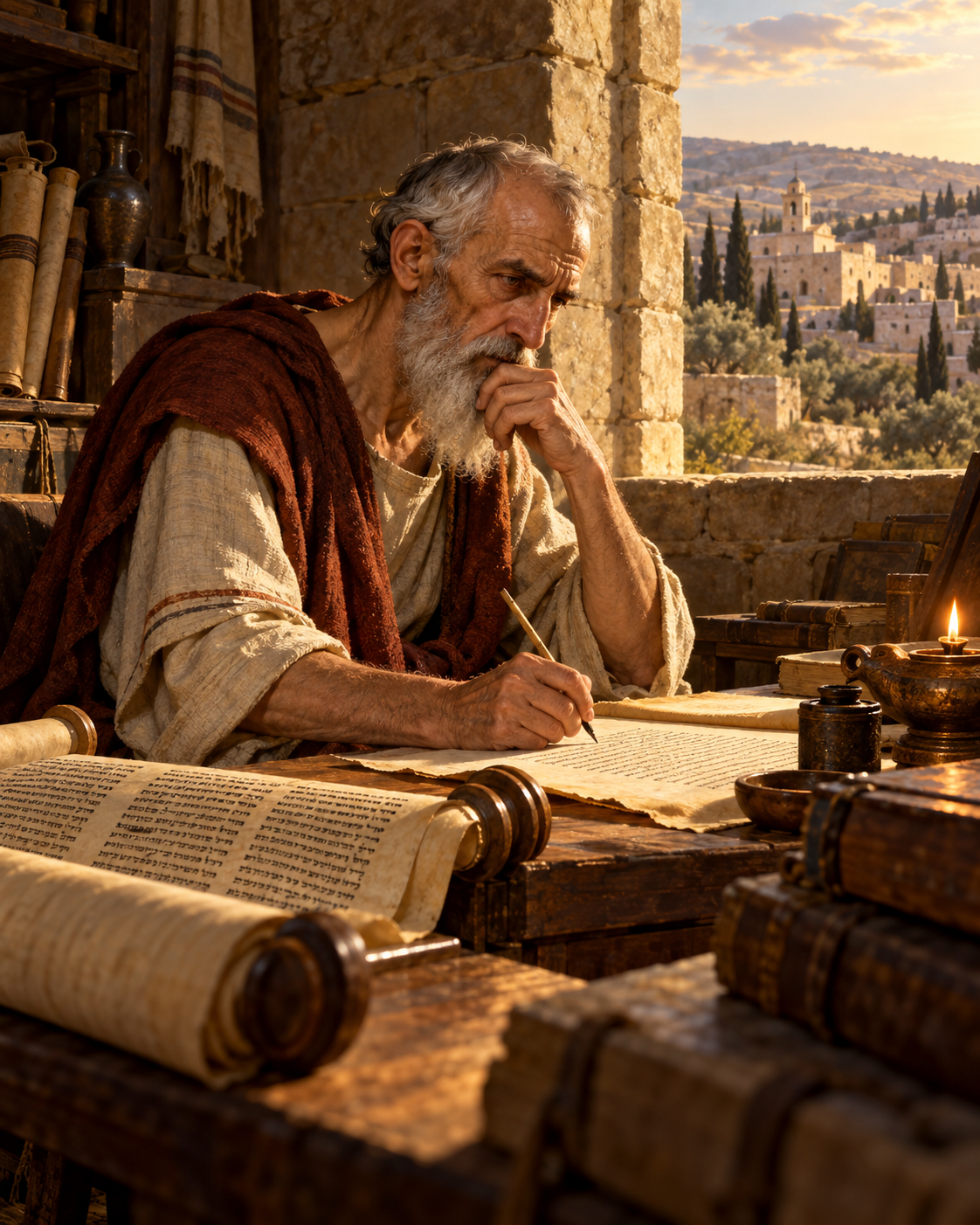
On September 30, 420, Jerome died in Bethlehem, where he had spent more than three decades studying and translating Scripture. This September 30 marks the 1,606th anniversary of his death. His life took him across the Roman Empire, through classrooms, desert solitude, church disputes, and a demanding translation project that would influence Western Christianity for centuries.
Born around 345 in Stridon, near the border of present-day Croatia and Slovenia, Jerome received a Christian upbringing and studied rhetoric in Rome. He developed a deep love for classical Latin literature. That education gave him the tools to become a formidable writer, though he later wrestled with the place those literary tastes held in his Christian life.
Jerome's search for a more disciplined faith took him east. Near Antioch, he withdrew into the desert, where he devoted time to prayer and began studying Hebrew. He later became a priest and continued his studies in Constantinople. By the time he returned to Rome in 382, he had acquired the language skills that would define his life's work.
In Rome, Jerome became a close associate of Pope Damasus and began revising earlier Latin translations of the Gospels. He also taught Scripture among a circle that included Marcella, Paula, and Paula's daughter Eustochium. These women were part of the community of study and devotion surrounding him, a reminder that his biblical work grew through relationships as well as long hours with manuscripts.
After Damasus died, Jerome left Rome. He settled in Bethlehem in 386 and remained there for the rest of his life. Near the place associated with Jesus' birth, he helped establish communities for men and women and lodging for pilgrims. There he wrote commentaries, answered letters, and undertook his most consequential task: translating the Old Testament from Hebrew into Latin.
Why go back to Hebrew when Christians already had Greek and earlier Latin versions? Jerome believed careful attention to the biblical languages could help readers understand the text more faithfully. His work was painstaking and sometimes controversial. The Latin Bible associated with him, later known as the Vulgate, nevertheless became deeply embedded in Western worship, theology, literature, and art.
Jerome's personality was as forceful as his scholarship. He defended his views fiercely and could be harsh toward opponents. His anniversary offers an honest portrait of a gifted, imperfect Christian whose devotion to Scripture produced work far larger than his own lifetime.
Sixteen centuries later, Jerome's story still poses a question for churches and translators: What does it take to make Scripture understandable without losing sight of the words from which it came? Jerome spent his life studying that question. The Bibles Christians open today show why it still matters.


