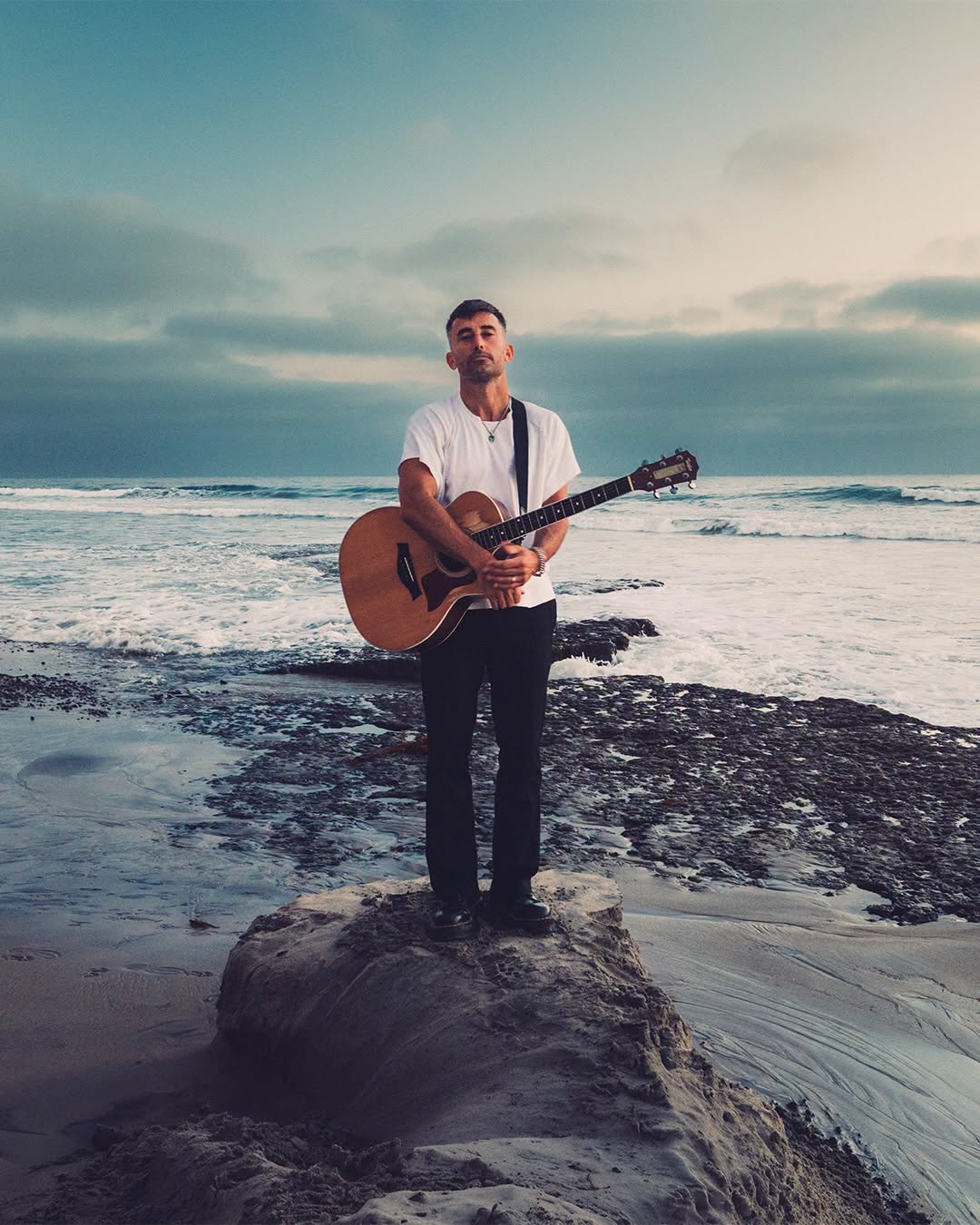
Phil Wickham may be one of Christian music's most recognizable worship leaders today, but apparently, leading thousands of people in worship wasn't always the career he imagined for himself.
In a surprisingly candid new appearance on The Jesus People Podcast, Wickham revealed that his younger self had something considerably more rock-and-roll in mind: he wanted to be Bono.
"There's a time in my life I wanted to be Bono," Wickham admitted while discussing his early musical ambitions, adding that he wanted to be in a band before God ultimately "closed that door."
And this wasn't merely a passing teenage fantasy.
Wickham revealed that he and his best friend Sean formed a band called Fairchild when he was around 18 or 19. The pair apparently had some very big plans for themselves.
Their dream?
"We are U2 2.0," Wickham recalled of their thinking. "I am Bono, he is Edge."
The two were writing songs and dreaming about "conquering the world." Meanwhile, something rather different was quietly happening in Wickham's life: people were already singing the worship songs he had written.
An affluent family who knew Wickham's parents even stepped in with a remarkably generous gift. After hearing that his songs were spreading among churches, they reportedly wrote a check worth tens of thousands of dollars so Wickham and his father could purchase recording equipment.
The result was Wickham's early worship album Give You My World.
Here's the twist: Wickham said he wasn't even trying to shop the record around.
"I never sent it to anybody," he recalled. Yet within about a year, record labels began calling. Wickham initially resisted because he still considered worship his side project while the band represented his real musical ambition.
At the same time, he was leading worship at different churches virtually every Sunday-and loving it.
The collision between the career Wickham wanted and the ministry seemingly opening in front of him eventually came to a head during a trip to England.
Fairchild was appearing at a Christian festival when torrential rain sent thousands of people squeezing into a tent. Then things got even crazier: the generators failed, the lights went out and Wickham found himself standing before a huge crowd with no normal concert setup.
Instead of stopping, he began worshipping.
Wickham walked to the front and started singing "I Love You, Lord" at the top of his voice. The crowd joined him.
He described it as a "Braveheart moment."
Looking back, Wickham now believes the direction was there much earlier. He recalled experiencing tremendous joy even as a young boy leading worship before a group of just 13 kids.
But Wickham's podcast confessions didn't stop with his abandoned Bono ambitions.
The singer also got candid about one of the less-discussed sides of becoming a Christian celebrity: making sure his children don't grow up believing their father's success makes them special or entitled to preferential treatment.
Wickham said he and his wife have to be careful when people offer the family free things, better seats or other perks because of his fame. His concern is that his children could begin believing they "deserve more" simply because of who their dad is. The interview specifically highlights his desire to protect his family from entitlement and the pressures surrounding Christian celebrity.
Perhaps the most personal revelation, however, came when Wickham discussed his own spiritual surrender.
He recalled sensing a piercing question in his spirit: "Phil, are you letting me be the Lord of your life?"
Wickham acknowledged there were "dark corners" of his life where he had not fully allowed God's light in. The episode describes his journey of confronting strongholds, false beliefs, insecurity, addiction and the desire for approval as part of learning what surrender to Jesus actually means.
That confession adds an unexpectedly vulnerable layer to the polished worship leader millions of Christians see onstage.
The man behind "Living Hope" and "This Is Amazing Grace" admits that success didn't eliminate struggles with insecurity or the temptation to find worth in other people's approval. Instead, Wickham says freedom came through increasingly surrendering those areas of his life to Christ.
And even some of his biggest worship songs have surprisingly unglamorous origins.
Wickham revealed that "Living Hope" was developed over months, while other songs can take years to finish. His Psalm 23 adaptation came from a completely different place: during the 2020 lockdown, Wickham began putting Psalms to music simply because he wanted Scripture more deeply embedded in his heart. He wasn't initially trying to produce another hit.
That song reportedly came together in roughly 30 minutes.
All of it connects with the message behind Wickham's book Everyday Hallelujah: Unlocking Deep Joy Through Everyday Acts of Worship. Rather than defining worship as what happens beneath stage lights before thousands of fans, Wickham is pushing the idea that worship is surrender expressed through ordinary life.
It makes his career trajectory rather ironic.
Phil Wickham wanted to become Bono.
Instead, the rock-star door closed-and the worship songs he initially treated as the side project became the music that defined his life.


