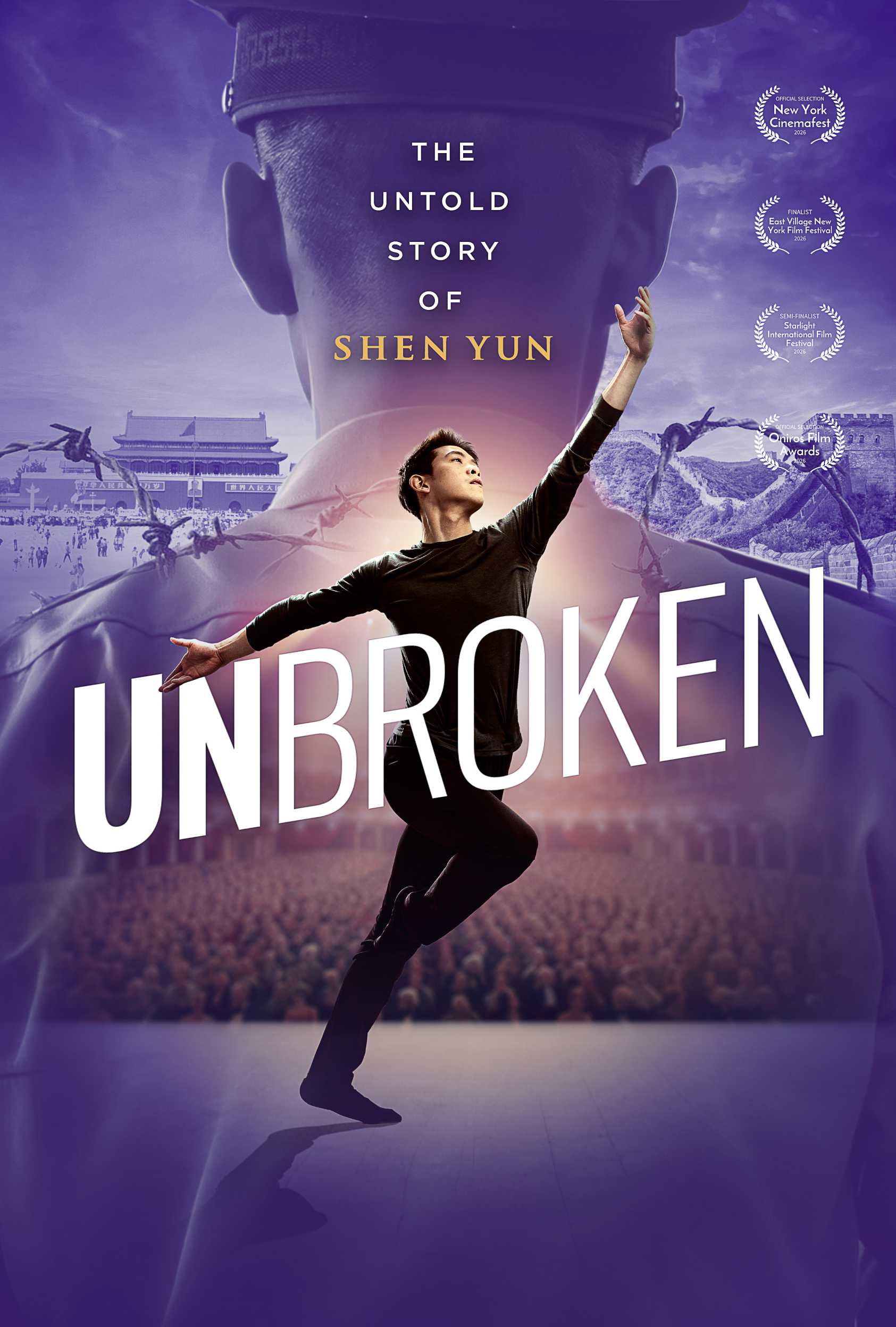
As conversations around faith, identity, and cultural freedom continue to resonate across the world, the new documentary UNBROKEN: The Untold Story of Shen Yun offers a timely and deeply personal look at perseverance under pressure. Through unprecedented behind-the-scenes access to Shen Yun Performing Arts, the film explores the sacrifices, discipline, and spiritual conviction that shape the lives of its performers, while following the journey of two American brothers who discover purpose and calling through the art form. Blending themes of resilience, family, and unwavering belief, UNBROKEN highlights what it means to remain steadfast in one's convictions in an increasingly uncertain world.
We are honored to chat with Fiona Young, the director of "UNBROKEN," for this exclusive interview.
Q: What inspired the story behind UNBROKEN: The Untold Story of Shen Yun, and why is this message especially relevant today?
When we began this film, our guiding questions were simple: What do you do when everything you love-your family, your art, your faith-is at stake? How far would you go to protect it?
As Shen Yun prepared for its global tour, I wanted to go behind the scenes and understand what life looks like for the artists beyond the glamour. What I found was a very different reality. On tour, they were navigating bomb threats, harassment, and an ongoing smear campaign to discredit their work and identity.
It raised a deeper question for me: how do you create under that kind of pressure? Shen Yun is known for its beauty and spectacle, but what stayed with me was the conviction of the artists-so rooted in their identity that no amount of pressure could move them. Their faith isn't separate from their art; it's the foundation of it.
At its core, UNBROKEN is about perseverance-about staying true to your beliefs when they're tested. We're living in a time when faith, truth, and identity feel increasingly fragile, even here in America. I think many people of faith will recognize this story immediately. It's ancient. It's personal. And now more than ever, it's urgent.
Q: How does the film's behind-the-scenes access to Shen Yun Performing Arts help audiences better understand the discipline, faith, and purpose behind the performances?
What audiences see on stage is breathtaking, but what I wanted to capture was everything that happens before the lights come on-the early mornings, the discipline, the injuries that don't stop anyone from showing up, and the quiet, almost prayerful moments before a performance.
Being embedded with the artists on tour allowed us to witness raw, unfiltered moments of the rigor, the setbacks, the team spirit, the joy they share with each other, and their love for the craft. Spending time on Shen Yun's beautiful, serene campus where the artists train also gave us a closer look at the culture of this community-deeply rooted in tradition and faith.
One of the artists told me, "Art is a reflection of yourself." Likewise, I wanted to reflect their inner world through cinema. Every gesture on stage carries meaning. Every rehearsal becomes an act of devotion. I think viewers of faith will understand that language-what it means to live out your beliefs not just in words, but in your actions, your breath, your movement, and your work, every single day.
Q: Why was it important to center part of the story on the journey of the two American brothers, and how does their experience reflect the film's broader themes?
Their story gave us a doorway. They didn't grow up in the world of performing arts. They didn't grow up near a stage. They came to it from ordinary American childhoods, sports, baseball fields and all.
Watching them grow from self-doubt into conviction, from individual ambition into a sense of shared mission and responsibility, felt like a universal coming-of-age story. But it's also a story about calling. About discovering something larger than yourself and choosing to give your life to it, even when it costs you something.
I think any person of faith who has wrestled with that kind of commitment can feel the weight of their journey and it impacts how you choose to live your own life. I think that makes it a very special story and also very universal.
What I also found important was their commitment to an art they came to love so deeply, and their willingness to fully dedicate themselves to it. There's an athletic spirit in that journey-the drive and the pursuit of excellence-that feels very American to me, and increasingly rare in young people today, which is something I really wanted to bring out in the film.
Q: The documentary touches on challenges and external pressures-how does it balance those realities while still emphasizing perseverance and hope?
As filmmakers, we didn't want to let the darkness overshadow what is, at its core, an inspiring story about hope and perseverance. I think that's really at the heart of Shen Yun. The more we delved into the story, the more that became clear to me.
The challenges are real-bomb threats, smear campaigns, coordinated disinformation-and we document them honestly. But I was always more interested in how these artists responded than in the attacks themselves.
What I witnessed wasn't fear or bitterness, but a deepening sense of purpose and inner strength. One dancer told us that facing opposition only pushed him to train harder, perform better, and share the art more widely. To me, that's a profoundly spiritual response to adversity.
It reminds me of the idea that how you meet challenges can refine you-not just as an artist, but as a person, and even those around you. In that sense, adversity becomes a catalyst for something greater. That ability to transform hardship into hope is what resonated with me most-and it's been very encouraging to see audiences responding to that as well.
Q: In what ways does UNBROKEN expand the public's understanding of Shen Yun beyond its global stage presence?
Most people who have seen Shen Yun carry away an impression of beauty and culture. What the film reveals is that everything on that stage flows from a place of deep spiritual conviction.
These performers believe that for thousands of years, Chinese civilization was connected to God and to Heaven, and that what the Communist regime has tried to erase, they are called to restore through art. That's an extraordinary mission for anyone at any age, but to see that being carried out by young people with talent and passion was just extraordinary.
The film also humanizes that mission through family, seeing parents wrestling with fear, siblings leaning on each other, performers far from home sending loving phone calls back. When you understand the inner life behind the performance, the art takes on a completely different dimension.
Q: What do you hope viewers take away about faith, conviction, and standing firm in one's beliefs after watching the film?
I hope they walk away reminded that the most powerful thing a person can do in the face of opposition is to remain whole and true to yourself and your beliefs. To not become hardened or defeated or harbor resentment.
These artists didn't fight back with anger; they answered every attempt to silence them by continuing to create and seek artistic excellence, to strengthen faith, and to continue to show up. I believe that kind of steadfast resilience is a spiritual act. It says: what is true in me cannot be taken.
I grew up in China and built my life in the United States, and I know firsthand how precious and fragile creative and spiritual freedom can be. This film is my prayer, in a sense, that we never take it for granted, and that we find the courage to protect it.


