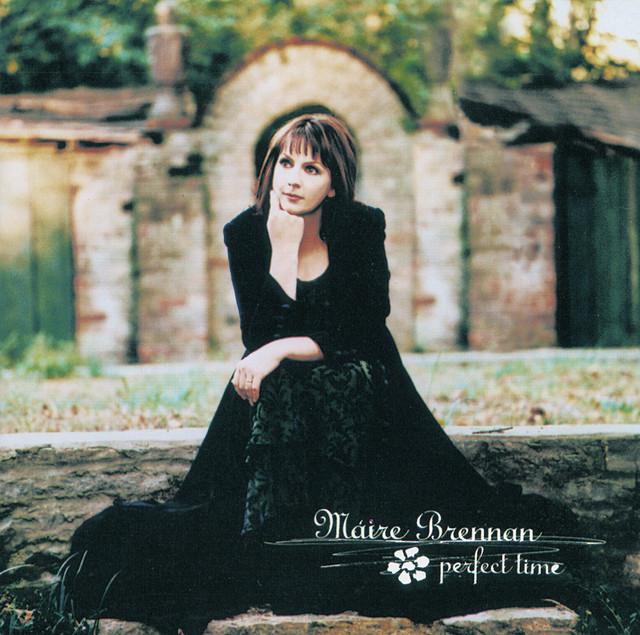
Prime Cuts: "Heal This Land," "Song of David (Psalm 67)," "Grá Dé (The Love of God)"
Overall Grade: 5/5
The passing of Moya Brennan marks the loss of one of the most distinctive and reverent voices in both Celtic and Christian music. As listeners revisit her catalog, Read about her passing here. Perfect Time (1998) stands out as a defining moment-an album that captured not only her artistry, but her deepening commitment to faith during her early years with Word Records.
When Brennan released Perfect Time, she wasn't chasing trends-she was shaping a space. The album feels less like a standard collection of songs and more like a slow, intentional act of devotion, where each track unfolds with patience and purpose. Listening now, it becomes clear that its power lies not in immediacy but in immersion.
"Heal This Land" remains the defining moment. There's a quiet gravity to it, the kind that builds not through dramatic crescendos but through steady, prayerful layering. Brennan's voice never strains; instead, it carries a calm authority that makes the song feel communal, almost intercessory. It's easy to hear why this track endured beyond the album-it speaks to seasons of need without tying itself to a single moment.
"Song of David (Psalm 67)" shifts the focus from personal prayer to Scripture itself. The inclusion of choir elevates the track into something liturgical, as if the listener has stepped into a sacred gathering rather than a studio recording. Brennan doesn't reinterpret the psalm so much as frame it, allowing its ancient cadence to resonate within a Celtic sonic landscape.
Closing track "Grá Dé (The Love of God)" is where the album reaches its emotional and spiritual peak. It stretches outward, blending language and melody into something expansive yet deeply intimate. The slow build feels almost sacramental, drawing the listener into stillness rather than spectacle.
Elsewhere, the album moves with remarkable consistency. "The Big Rock" anchors the project with themes of refuge, while its instrumental reprise provides a reflective closing loop. The title track drifts with a sense of suspended time, embodying its message through pacing alone. "Na Páistí (The Children)" introduces a fragile tenderness, its simplicity offering one of the album's most human moments, while "Our World" broadens the lens, even if its ambition occasionally outpaces its structure.
What stands out most is Brennan's restraint. Coming out of her work with Clannad, she retains the atmospheric textures-harp, soft keys, traditional instrumentation-but channels them into something more explicitly devotional. There's no need to overstate emotion; the arrangements trust silence and space as much as sound. Even the late-90s production touches, though dated in places, never distract from the album's central posture of reverence.
In retrospect, Perfect Time feels quietly ahead of its time. Long before ambient worship and contemplative Christian music found a wider audience, Brennan was already crafting songs that invited listeners not just to sing, but to reflect, to pray, and to linger. Now, in light of her passing, the album resonates even more deeply-not just as music, but as a lasting testament to a life that turned sound into worship.


