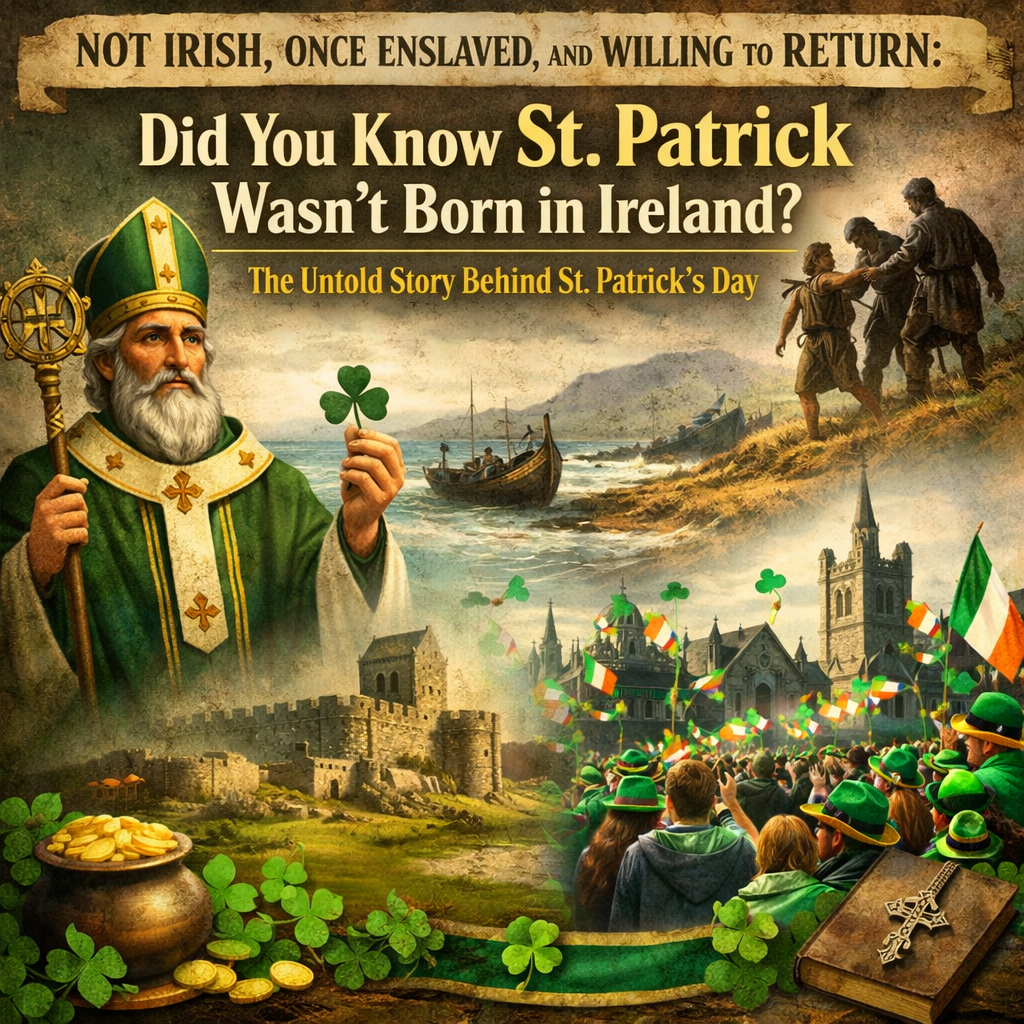
Each year, St. Patrick's Day is marked by celebration, tradition, and cultural pride. Yet behind the global festivities lies a story far more complex-and far more compelling-than many realize. According to historical accounts, Saint Patrick, the beloved patron saint of Ireland, was neither Irish by birth nor initially a figure of faith.
Born in Roman Britain, Patrick was raised in a nominally Christian household but admitted in his own writings that he lacked genuine spiritual commitment in his youth. His life took a dramatic turn when, at approximately sixteen years old, he was abducted by Irish raiders and taken across the sea into slavery. There, he spent years tending sheep in isolation-an experience marked by physical hardship and emotional distress.
It was in this wilderness, however, that Patrick's faith was awakened. In his autobiographical Confessio, he recounts a growing life of prayer, describing how suffering became the catalyst for spiritual transformation. What began as captivity ultimately became a crucible for calling.
After six years, Patrick escaped and returned to his family. By all accounts, his ordeal could have ended there. Instead, it became the beginning of a mission that continues to shape history. In a decision that still astonishes historians and theologians alike, Patrick chose to return to Ireland-the very land of his enslavement-this time as a missionary.
His return was not driven by conquest or obligation, but by a profound sense of divine calling and compassion for the people among whom he had once suffered. Through preaching, teaching, and community formation, Patrick played a significant role in the spread of Christianity across Ireland, leaving a legacy that would endure for centuries.
Modern celebrations often emphasize symbols such as shamrocks, festive attire, and legendary tales like the banishing of snakes. Yet scholars increasingly point to Patrick's lived experience-his endurance through suffering, his spiritual awakening, and his radical return-as the true heart of his story.
"Patrick's life reframes how we understand both mission and identity," scholars observe. "He was an outsider who became a spiritual father to a nation-not through power, but through perseverance, humility, and faith."
As St. Patrick's Day is celebrated around the world, this deeper narrative invites audiences to look beyond the myths and rediscover the historical figure whose life was marked by trial, transformation, and a remarkable sense of purpose.


