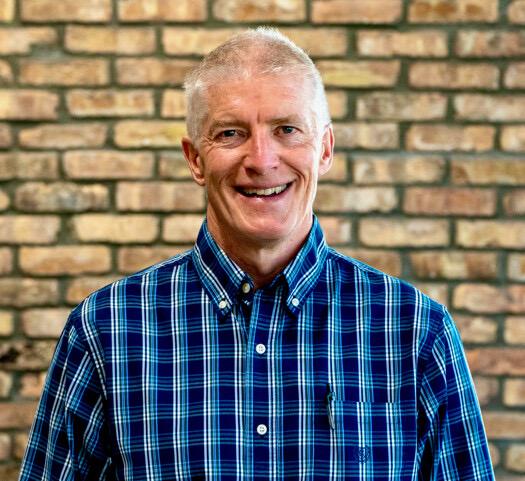
Author, keynote conference speaker, skilled labor advocate, and president of Craftsmen with Character, Dave Hataj believes that meaningful work and strong character are foundational to a thriving society. His upcoming book, The Craftsman's Code: A Blueprint for Building a Meaningful Life and Enduring Legacy, set for release in Spring 2026 from Fitting Words, has already climbed into the Amazon Top 100 Best Sellers in pre-sale.
In a cultural moment when many assume that a four-year college degree is the only pathway to success, Hataj offers a compelling alternative vision-one that celebrates the dignity of skilled labor and the deeper purpose found in craftsmanship, mentorship, and faith. In this JubileeCast conversation, Hataj shares why the message of The Craftsman's Code is especially timely and how its principles can help individuals from all walks of life rediscover their calling and build a life that truly matters.
Q: The Craftsman's Code: A Blueprint for Building a Meaningful Life and Enduring Legacy Kindle version has already reached the Amazon Top 100 in Vocational Guidance. What do you think is resonating so strongly with readers even before the print edition officially releases?
I think our society is undergoing a seismic shift in regard to careers and education, as well as a profound lack of purpose among the younger generation. We can look at a number of reasons for this-the expense of education, the fear and reality of AI replacing jobs that often require a four-year college degree, as well as toxic social media that paints such a bleak view of life that is rooted in materialism and pleasure-seeking rather than living a life of deep significance God offers to us.
Q: In a culture that often presents college as the only path to success, your book highlights the dignity and necessity of skilled labor. Why do you believe this message is especially timely right now?
I believe we have to go back to pre-COVID days and understand how our society in general viewed blue-collar work. Blue-collar folks have always been underappreciated, overlooked, and even denigrated, even though we are the ones who literally build our physical communities of houses, schools, roads, and buildings that comprise our modern civilization.
But COVID did us all a strange favor. When the lockdowns were initiated for everyone except "essential workers," for the first time in a generation we were forced to ask, "Who is essential? What kind of work is essential?" We quickly realized there are many jobs in our society that really aren't critical and essential to the survival of our way of life. But take away skilled labor such as electricians, plumbers, machinists, truck drivers, and a myriad of other jobs, and our economy and infrastructure crumbles.
Since that stunning revelation for many folks, the rapid development of Artificial Intelligence is making people wonder if any jobs are AI-proof, asking what jobs are not threatened by AI. The simple answer is skilled trades. For example, AI can't unplug your toilet, build and remodel your house, or make the custom equipment needed to grow, package, and deliver our food.
And I'm not saying no one should ever go to college. There definitely are careers that need higher education. But, in general, we've oversold higher education as the ultimate path to success, while incredibly important and dignified work has been touted as an inferior path.
Q: You write that God calls us to be "extraordinarily ordinary." How has that conviction shaped the way you view daily work, leadership, and success within the workplace?
This question hits home for me personally. Growing up in my dad's grimy and gritty machine shop, I actually felt embarrassed as I grew older that I was just a machinist that made gears. I felt looked down upon by teachers as the "smart" kids going to university were thought to have a bright future while the rest of us were going to labor and waste away in our "meaningless" jobs in factories and building sites.
We've all been a product of very bad theology and philosophy that there is a hierarchical order of professions and callings-that some jobs and professions are more important than others.
But when I came to realize how important we all are, that God has uniquely gifted every individual with unique gifts and talents, that was a game changer for me personally.
So, in my business, as a leader, I started emphasizing and tried to inspire my employees to know how valuable and extraordinary they are, even if the world doesn't recognize them.
And an amazing thing started to happen. Young people especially that often struggled in school started getting great grades and exuded hope for the future. Our other employees showed a greater sense of pride and joy in their work. Our employee turnover dropped as we became a tight-knit community that respected and appreciated each other's efforts.
All of us are desperate for affirmation, to know we fit somewhere in the world. My role as a leader is to consistently communicate this message.
Q: As president of a second-generation family business, what lessons from Edgerton Gear have most influenced your views on mentorship, character, and long-term legacy?
First of all, when you work with people long enough, you realize that we are all broken and bear a lot of unnecessary baggage.
A common mantra in the workplace is that we are supposed to leave our personal lives at the door when we come to work. But the reality is this is impossible.
Yes, Edgerton Gear makes gears. But our primary business is people. For without people, we don't have a business. And without caring for people, our business is soulless, lacking heart.
Every human God created has two very essential needs. One is having a sense of purpose, to have a reason to get up every morning, knowing we play a critical part in making the world better. Secondly, we have a deep need for healthy relationships, for community.
Being in business takes these two needs seriously as our employees spend more time at work than they do at church or with their families. That's a stunning and heavy responsibility.
So, the bigger question then becomes, "How do we steward this responsibility to help them be who God intended them to be?"
Therefore, mentorship and character development isn't simply about helping them be more productive employees. It's cultivating a worldview in them that is life-giving, that helps them make good life decisions, to live a life of excellence, and working in unison with what the Holy Spirit is doing in their lives, no matter where they are on their spiritual and life journey.
As for long-term legacy, we often forget that legacy is important for everyone, not just for the life of the business. Yes, I'm incredibly blessed to have my sons, the third generation, take the reins of Edgerton Gear. But I get just as much joy in seeing an employee break the generational chains of addiction, poverty, or abuse in their families because they worked at Edgerton Gear.
That's an awesome legacy!
Q: Through your work with Craftsmen with Character, you've invested deeply in the next generation. What do young people today most need to hear about purpose, work, and their value to society?
I've wrestled with this question for the past forty years and boiled it down to The Craftsman's Code: six principles that I needed to know as a teenager when I felt lonely, lost, and even suicidal.
We have our students memorize these six and try to pound them into their heads and hearts. For to have a biblical, practical worldview is often a matter of life and death-of living a life lacking meaning and purpose, to knowing they're not an accidental blob of flesh floating aimlessly through the universe but are extraordinarily made for a reason.
-
I am not the Center of the Universe.
-
I don't know Everything, nor nearly as much as I think I do.
-
There is dignity and purpose in knowing my trade.
-
The world needs me!
-
Pay is a reward for my efforts but not my main motivation.
-
Every person has unique gifts and talents.
Q: Looking ahead to the release of The Craftsman's Code on April 1, what do you hope readers from all walks of life will begin to do differently after engaging with its message?
My hope for readers is they will not only throw off their chains of hopelessness, self-indulgence, or mediocrity, but will recognize how impactful they can be, no matter their sphere of influence.
I hope and pray they will live, work, and play with the fullness of life Jesus spoke about.
Life is hard for all of us. But we have a daily choice to live for ourselves or to join in and embrace God's greater purposes of healing, reconciliation, and goodness no matter where God plants us.
Can you imagine if enough folks rose up and declared that they will be an agent of transformation and goodness in every corner of the workplace and society?
What a different world it would be.
For more information about Dave Hataj and The Craftsman's Code, visit davehataj.com and cwccharacter.org.


